Showing posts with label Racism. Show all posts

Sunday, June 7, 2020

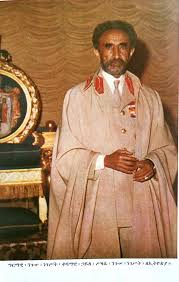
The Philosophy which holds one Race Superior and another Inferior.

Until the philosophy which holds one race superior and another inferior is finally and permanently discredited and abandoned, there will be war everywhere.
And until there are no longer first-class and second-class citizens of any nation.
Until the color of a man's skin is of no more significance than the color of his eyes.
And until the basic human rights are equally guaranteed to all without regard to race, there will be war.
And, until that day, the dream of a lasting peace, world citizenship and rule of international morality will remain but a fleeting illusion to be pursued, but never attained.” - From the selected speeches of Haile Selassie of Ethiopia (Made famous by Bob Marley & the Wailers in the song “War”).

Wednesday, June 3, 2020

A Very Strong Message from Arnold Schwarzenegger.

"I have a message for the neo-Nazis, the white nationalists and the neo-confederates. Let me just be as blunt as possible: Your heroes are losers!You’re supporting a lost cause. Believe me, I know the original Nazis.
I was born in Austria in 1947, shortly after the end of the 2nd world war. Growing up, I was surrounded by broken men…men who came from the war with shrapnel and guilt…men who were misled into a losing ideology. And I can tell you; these ghosts that you idolize spent the rest of their lives in shame. And right now, they are in hell. I know you were not born with these hateful views. No one is. But the truth is, it’s never too late to make the choices to learn and to evolve and to understand that all humans have equal values…
And to those of you who have been silent, you must also evolve. I have learned a long time ago that the only way we can eliminate hatred is to confront it head-on. It’s not always comfortable, of course. But stereotypes, racism, religion or anything else are like cancer. If you had a tumor, you would not quietly hope that it slowly disappears. You would zap the hell out of it with chemotherapy, cut it off and try every experiment until it was gone. Hatred is not different!” – Arnold Schwarzenegger (38th Governor of California).

Saturday, May 30, 2020

The Murder of George Floyd in Minneapolis.

One was a veteran of the Minneapolis Police Department who moonlighted as an off-duty security guard. The other man provided security at a Salvation Army store and spent some of his evenings at local clubs, working as a bouncer.
 
In the year before their fatal encounter, George Floyd, 46, and the officer now charged with his death, Derek Chauvin, 44, worked at the same Minneapolis Latin nightclub, both part of the team responsible for keeping rowdy customers under control.

Their paths crossed for the last time in the waning light of a Memorial Day evening, outside a corner store known as the best place in town to find menthol cigarettes. Within an hour, Floyd was dead, his last pleas and gasps captured in a horrifically graphic video.

In a move that has since prompted protests in cities across the country, Chauvin knelt down on Floyd behind a police vehicle outside the store. For eight minutes and 46 seconds, according to a criminal complaint filed Friday by the Hennepin County district attorney, the police officer pressed his knee into Floyd’s neck in silence, staring toward the ground as his captive gasped repeatedly that he could not breathe.

Bystanders waved their cellphones, cursed and pleaded for help, and still, for two minutes and 53 seconds after Floyd had stopped protesting and became unresponsive, the officer continued to kneel. Floyd’s case began with a report of a counterfeit $20 bill that a storekeeper said he tried to pass to buy cigarettes.

“He died for nothing — something about a fake bill — that was nothing,” said Jason Polk, 53, a city bus driver and one of a number of South Minneapolis residents who have expressed outrage over the case.

Gov. Tim Walz called the fatal arrest, and the nights of violent protests that have come after it, “one of our darkest chapters.”

“Thank God a young person had a camera to video it,” the governor said.

With Chauvin in custody and formally charged with third-degree murder and second-degree manslaughter, prosecutors must now try to understand what happened in the chaotic moments before Floyd was taken to the Hennepin County Medical Center and pronounced dead at 9:25 p.m.

Monday, June 10, 2019

Black in Boston by Ibn Safir.

I’m from Boston.

Boston doles out its racist vitriol like paper-cuts. It’s not Confederate flags on mud flaps and SS tattoos (unless you date white girls from New Hampshire), it’s smiling pastors’ wives telling you how scary you look until you smile, days before your 14th birthday, when Rubik’s cubes make more sense than girls, and white girls come with fathers who flash guns. It’s being left off of scholarships at your prestigious Catholic high school for your half-moon Caesar despite the highest GPA among the pool of finalists. Or being voted captain by your teammates and seeing it go to the backup quarterback. Or lying to your mother about why curfew moved back an hour without her noticing.

You traded that hour to satisfy the anger of a Keene, NH, cop who trailed you across state lines to pull his gun and trash your car, because the friend you’d had since middle school was too blond and too Christian to have been comfortable in the car with you. It’ll be good practice for lying about the night you fell asleep on your home girl’s couch.

You spent that night in holding after cops didn’t like your explanation for the money in your pocket.

To live and thrive in Boston, you’ve got to do so in white spaces. Because the whole city is a white space. It’s not that blackness isn’t tolerated. It’s that there’s no space for it, because the city refuses to make space for it. When new awning fees force out longstanding black businesses, politicians celebrate development. When the Boston Globe breaks down its history, it responds with silence. Black is the enemy of opportunity in Boston. Your ability to remove attention from your black ass determines your ability to get your size from a high-end retailer on Newbury Street, or a table at Eastern Standard, or a liquor license or a business loan. You think your Boston accent makes Officer Mulcahy’s sound like Jack Nicholas’. If it saves you from getting a knee in your back, you’re right.

I’d say I talk like a Wahlberg, but Marky Mark might have an issue with that. The fight-flight choices for black folks in and around Boston are moving and tokenism. I live in New Jersey. I tried tokenism before and would’ve kept it up if it weren’t for Pastor Alan. I met Sean around 13. A year older, Sean lived a few towns over. His dad, Alan, was the youth pastor, a no-paying role he took on for weekends between his engineering duties at GE. Sean was a dirty-blonde kid who looked like a first alternate for a boy band, with the cleanest bowl cut this side of the Mickey Mouse Club. He also knew (but didn’t recite) every word to any and every Mob Deep song.

My mother would begin what would seem like two years of endless surgery shortly thereafter. During one of her brief breaks in those years, my stepfather would be jailed, released, kidnapped, and shot. Sleepovers became standing weekend arraignments. My father only recently stopped choosing Johnnie Walker over child support and phone bills. When I was 14, Johnnie won every time. So after teaching me to tie a tie, shine my church shoes and change a tire, Sean’s dad, likely cast as Dennis Quaid in my biopic, became mine, too.

Being a black “man” at 14 is fun for a while. By 15, though, after a summer full of cops pressing you for details to and from football practice, the shine was off being 5’9” and 225 pounds. Once it settled in that I was dangerous, I felt there were two choices: I could lean into being dangerous, or I could achieve my ass off in an effort to be a real credit to my race and to my class, like my guidance counselor would tell me I could be if I got into trade school with my serviceable 1450 SAT score.

At first, being a token felt like revenge. Like a polite middle finger to the Spanish teachers who were sure I was cheating, or the parishioners who clutched their purses in the parking lot. After the school nurse accused me of faking a 103-degree fever, I landed a story in the local newspaper. I took the interview in front of her office. I’d land myself in a few more papers and on a few newscasts. The light and the acoustics were so good down her hallway, it only felt right to take each and every single interview there in front of her office.

Eventually, like any fish-out-of-water comedy, tokenism gets too lucrative, too easy, too corrupting. Banquets are long, so it becomes easier to pre-empt the scorn. Between my first taste of manhood and my senior year of high school, I’d shucked and jived my way into a full scholarship, honors housing at a prestigious university nearby, a car, and a few lunches with the type of rich folks who argue over naming rights for high school stadiums. It wasn’t that I didn’t know what it was to be black, or what it was to love being black. I learned that from the mixtape man at Simco’s, Bishop John Borders and Miss Farrow’s Beauty Salon. Pro-black kites at the Kite Festival and family cookouts at Salem Willows fueled my love for the skin I was in, regardless of the conflict it caused on the way to and from the aforementioned oases.

The world outside of those spaces in and around Boston is one that vilifies blackness by trying to redeem it, that renders it foreign and antithetical to being a Bostonian, let alone a good one, whatever that means at the moment. I was celebrated because I was a credit to my race, because my intellect and diction have earned me this opportunity.

But if smiling through some gazillionaire’s treatise on everything wrong with my neighborhood was going to keep my mom from picking up a third job, then smile was exactly what I did. Eventually, I smiled so long through so many speeches and impromptu pep talks that I’d internalized far too much of it. My favorite spaces and things felt foreign, staffed by the “problems” and “wastes of space” I’d been told I wasn’t. I was impersonating the white gaze and casting it upon my own community. At some point during the summer before my first year of college, I must’ve intimated some form of that bullshit to Pastor Alan. The Irish North Shore kid had been black for as many days as he’d played in the NFL, but he wasn’t hearing it.

“This may come as a shock to you, but you…you know you’re black, right?”

The pastor who had kicked me out of his house for introducing his 11-year-old daughter to Nature’s sophomore album knew me enough to know that I’d stand the best chance being exactly who I was. He maintained I was insane for camping out in the cold for sneakers or that he would never understand how using the N-word with a soft A was different than its conventional use. But I was smart enough to make an opportunity for myself, and black enough to have a better handle on how to navigate what it means to be a man since 14. He told me he trusted my judgement over his own.

“You ain’t white, kid. Everyone’s tough here, just be black and let ‘em get over it.”

My mother had traded the hooded, cross-burning racism for its r-dropping northern cousin, and then watched it move slowly to release her husband from prison on trumped up charges. She’d helped neighbors fight expulsion over high-top fades and having to answer to names like “Cornbread” on the job. And she’d watched her nieces and nephews, left with their talents to the neighborhood, waste their potential. Blackness, as my mother tells me now, wasn’t a concern. I was always going to be black, I’d figure it out as I went along. To the outside world, I was sure to win to the extent that I didn’t remind anyone of my blackness.

My mother taught me to be safe, to be prepared, to keep my head on a swivel while instilling in me a love for learning and community. But a white, Irish pastor insisted I be as black as I wanted to be.

So much of navigating blackness is navigating white people. The day-to-day of mapping life around white emotion is enough to drive some of us insane. Mapping it wrong can get you killed and blamed for your own demise. Living to appease it can alienate you from what you’ve come to know.

Boston taught me to live my life to the best of my ability in spite of white emotion. Anyone with an issue will get over it.

Pastor Alan told me so.

Monday, June 3, 2019

You're So Different: OK, But What Makes You Black?

“You’re so different. You’re so articulate. Why do you talk like a white girl? You’re the whitest black girl I know.”
Comments like these beg the question: What makes you black? Is it merely the color of one’s skin? Is it a state of mind? Knowing the lyrics to Cardi B’s songs?
It took me a while to embrace that my blackness was not the stereotype others believed.
In some ways, I am different. I was lucky to be raised in a household where I received all that I needed, with some of what I wanted. My parents encouraged me to spread my wings and move from my native New York to Miami for a job as a prosecutor. Being a black prosecutor was isolating but I found others like me midway through my career.
I lived in a weird juxtaposition—I was a black female attorney, holding down a teaching job on the side, which allowed me some luxuries in life like a nicer car and the ability to travel. I never took it for granted; but in certain circles, I got pushback.
The message? That I “don’t know the struggle.”
Every black person’s struggle takes a different path but has the same theme. In my legal career, the struggle is respect, being heard, and having the ability to make meaningful change to uplift communities of color. The bias looks the same—while some people of color may be hesitant to embrace you because you’re perceived as “bougie,” certain white folks marvel that you can afford a luxury purse or a high-end foreign car without being tied to illegal activity. I was once at an event when a judge joked to me whether or not my Michael Kors purse was a result of dropping cases as a prosecutor.
No lie.
In doing community work, I often had to work harder to gain the credibility of my fellow people of color because I just seemed “so different.” One day, I was picking up a friend who lived in a poorer area of the city. She sent a young niece to let me know she was running late. I told her no problem. The niece went back to my friend and said, “why does she talk like that?”
“Like what, Sweetie?”
“Like a white girl” 
 

I never was great at the code switch—I just was always me. Besides, I had no code to switch from. The result was working doubly hard in every environment.
Finally, I just stopped.
I always bristle when someone says “well s/he’s black, but you know, not really” or “s/he is the whitest black person I know.” Often this is said by a white person, possibly thinking it’s some sort of compliment, along the same lines of “You're just so articulate.”
 
Really? How is that? Because the person doesn’t fit some sort of stereotype? Speak in a certain way? Throw the black power fist in the air for your entertainment?

To me, it’s not just about knowing pop culture or the latest urban wear designer. It’s knowing your history and being authentic to your roots. I’m an African-American woman, born of two immigrant Caribbean parents. If you really want to get down to it—Afro-Caribbean-American. I wear my hair in dreadlocks as a nod to the natural beauty of my own hair texture, not what Hollywood or someone else says is beauty. I can recite every Public Enemy song, but not so much for hip-hop past the year 2000 (I feel the message has been lost—with a few exceptions). I serve my community and humanity at large to the best of my ability. I fight injustice where I can. I see my dark complexion in the mirror and feel proud, strong and beautiful. Being African American presents challenges because of the ignorance of some, but I was given the tools at birth to be a warrior for positive change.
I’m in a place where I believe that the work I do daily reflects my authenticity. The work of fighting for racial equality is too important to get caught up in how I look or sound to others.
This is me.
Courtesy: Melba V. Pearson-Mecham.

Tuesday, October 16, 2018

'I don't Forgive This Woman, and she Needs Help', Says Wrongly Accused Child.

With tears streaming down his cheeks, a 9-year-old black child spoke out at a community meeting in New York about being wrongly accused of grabbing a white woman's backside in a corner store -- an incident disproved by security-camera footage.
With his mother standing beside him, Jeremiah Hervey delivered a simple message at the community meeting: "Friendship is really the key."
Jeremiah's emotional response came six days after Teresa Klein called the police and claimed the boy had grabbed her butt in a Brooklyn corner store Wednesday.
Klein issued an apology after viewing surveillance video of Jeremiah's backpack brushing her backside as he passed her in the store. The video clearly shows Jeremiah's hands were in front of him as he passed her. 
Klein also claimed that she called the police because the child's mother was aggressive.
"I felt someone grab my a--. I said, 'Don't touch my a--.' The woman flew at me, claimed she was a police officer, threatened to arrest me and I called 911," Klein told New York ABC station WABC.
On Friday, Klein returned to the store, as residents and local media stood by, to finally watch the surveillance video. Footage from inside the store showed the boy's book bag grazing Klein's butt. His hands, which didn't touch her, were in plain sight on the video. Klein later apologized on video to the boy after seeing the footage.
"Young man, I don't know your name, but I'm sorry," she said.
"She basically said, 'I'm calling the cops on you.' She didn't say the mom or anybody else. She said I'm calling the cops on you and that poor, little boy, man," Littlejohn told WABC.
"We're definitely going to make a movement out here," Littlejohn said in his Facebook post Sunday. "We're going to stop people -- I will say, people -- from dialing 911 unnecessarily. ... It's gotta stop, people. ... We will not let this continue to happen."

Sunday, May 14, 2017

Five Easy Ways to Spot a Racist Co-worker.

Institutional racism is endemic in the corporate world, especially in Silicon Valley, where almost everyone firmly believes neither they or their company is racist and only by coincidence are all the employees white or Asian. Curing institutional racism will require major changes, like anonymous interviewing and--let's just say it--targets and quotas to overcome unconscious bias. (Many companies feel comfortable with gender targets, but ethnic targets, not so much). While many people have unconscious bias, there are some who are just plain old racist. Since I grew up among racists, I can spot them easily. Here are the warning signs, with real life examples:
1. They begin sentences with "I'm not a racist but...": Only racists feel the need to establish that they're not racists. The dead giveaway is what comes after the "but..." It's always some outrageously racist remark that they feel it's OK to say out loud because they've established that they're not racists. Example: I was in a writer's group (all white) where one writer read a story that contained every possible racial stereotype. When I pointed out the story was offensive, he explained "I'm not a racist." Everyone else took his statement at face value, so I quit the group.
2. They cite a "black friend" as proof they're not racist: Having a friend, a lover, or even a child of a different ethnicity doesn't prove you're not racist. All it proves is you're making an exception. Consider: the notorious white supremacist Strom Thurmond fathered a child on an African American domestic. Example: A relative of mine who holds very racist views once tried to "prove" to me she wasn't racist by sending me a picture of one of her clients, who happened to be African American. Of course, her effort proved the opposite. I don't talk with her much.
3. They tell jokes that hinge on racial stereotypes: Racists like to "test the waters" to before expressing openly racist views. A common way to do this is to tell a ethnic joke and see how the other person or the group reacts. If there's disapproval, the racist clams up. If there's approval, they reveal their true views. Example: Early in my career, I worked with a guy who told lots of ethnic jokes. Because I was a newbie, I kept my mouth shut. One day I was in a car with him while he was driving. He got cut off and, boom!, out came the n-word. From then on, I avoided him.
4. They flaunt Confederate memorabilia: Scratch beneath the surface of anyone who proudly displays a "Stars and Bars" in their home or office as a symbol of their "heritage" and, nine times out of ten, you'll find an white supremacist. Example: When I lived in rural Virginia, the local bigwigs were into reenacting Civil War battles. Their "heritage," you know. According to my mother, one night while partying "in uniform," they found a young black man and beat him almost to death.
5. They think "reverse racism" is a real thing: Racists invariably hate any program that attempts to level the playing the field by giving a compensating advantage to individuals who have suffered from racism, either personal or institutional. Example: I've run into dozens of people in business who are convinced that anything similar to Affirmative Action is "reverse racism." Because they're blind to their own privilege, they can't imagine that it actually exists, much less do anything about it.

Courtesy: By Geoffrey James, Contributing editor, Inc.com.

Tuesday, January 17, 2017

For me to go to Heaven,

“In order for me to go to heaven, I may have to forgive him. But I will never ever forget, as long as I stay Black. And I don’t see any chance of me turning White.” -  Evelyn Turner while being interviewed by CBS Evening News. The 80 year-old woman is opposing the candidacy of Senator Jeff Sessions as Trump’s attorney general. Turner’s grouse was that 33 years ago, the terribly racist Sessions practically brought financial ruins upon her family. And this was because she and her husband (as Civil Rights activists) were helping to get people registered to vote.

Friday, November 11, 2016

Donald Trump and the American Women.

Donald Trump is the very first modern-day American presidential candidate to use profanity on national television without giving a damn. Yet, he got away with it because white American women formed a majority of those that voted for him. And this included those puritanical white women who would usually squirm if such a bad language was used by ordinary folks.  Therefore, the next time those so-called conservative pretenders cringe or cry blue murder whenever a profanity is used on national television or in a public place, they should be told, in no uncertain times, to shut the hell up! By casting their votes for Donald Trump, the multitude of white women had unwittingly given approval for the denigration of women by men. All kinds of ignorant men and especially, those rappers can now begin to have a field day with more misogynistic lyrics and negative attitudes toward women. Talk of sowing the wind and reaping the whirlwind.
The so-called fundamental Christians were the biggest jokers all through the campaign. Trump practically "charmed" them with his famous pretenses. The extremists in the Christendom thought he was one of them. To the scammed people, Trump was an exemplary Christ-like "Christian" even in spite of his many ignorant and abusive speeches. How stupid! Were the fundamentalists implying that Jesus was a racist, a misogynist, a demagogue and a thug?

Saturday, October 22, 2016

Charles Barkley has Something to say About Race in America.

Charles Barkley calls it friendly fire. When he talks about racial issues, it isn't only whites he risks angering. Some of the biggest complaints come from fellow blacks, who figure he's too rich, too successful to possibly understand their struggles. 

"Like, those people say he's not black anymore, he shouldn't speak on black issues," Barkley said. "I'm like, 'Dude, I'm always going to be black,' but that's a double-edged sword I'm willing to deal with."

So not only will he keep talking, he wants to lead the conversation. The basketball Hall of Famer and TNT analyst will debut "The Race Card" on the network in 2017, a show that won't just be about black and white, because Barkley believes America's problems are more about rich versus poor. 
"I just want to do a positive dialogue because I'm sick of arguing over race all the time," Barkley said. "Like, I'm very aware that racism does exist, it always has and probably always will, but the media does a really poor job. There's more good than bad, but the bad pops off the newspaper and on television. And like I said, the truth is somewhere in the middle."

On one hand, he seems an unlikely choice to be looking for it. In a Nike commercial during his playing career, he said himself he's no role model , and he still doesn't like the term now. And wearing a Ralph Lauren sweater and matching brown slacks during a lunch at a Manhattan restaurant Tuesday before slipping into a tuxedo for the induction of TNT's "Inside the NBA" studio show in the Broadcasting Hall of Fame, he does project the image of a comfortable life.

But born in Alabama in 1963, the year Ku Klux Klan members killed four girls in a Birmingham church bombing, he sees the same struggles now as during his youth. Like many of today's athletes, he's discouraged by the killings of blacks by white police and the protests, sometimes violent, that have followed.

Quarterback Colin Kaepernick of the San Francisco 49ers has been kneeling in protest during the national anthem, and many NBA players have stood with arms locked during the preseason. Barkley respects their actions but would like to see more. 

"It goes back to the Kaepernick thing," he said. "I said, you do what you want to do, you're a grown man. But I challenge all these guys, what are you actually doing in the black community to help our people?"
For Barkley, that's included donating millions to his high school and colleges in Alabama. But he can't blame today's athletes who grapple with their involvement, a discussion he had with a professor for the show. 

"He says, 'First of all, it's unfair for all you guys to have to solve the ills of all the black community. It's unfair, you guys aren't activists because you all haven't lived what those guys have been through,'" Barkley said. "And he says, 'I really think it's cool that you all are trying, but to try to compare today's black athletes to Jim Brown, Bill Russell, (Muhammed) Ali and those guys, we're doing them a disservice because those guys like lived.'

"They never told me I couldn't go to a restaurant or go to the same hotel," Barkley added. "I ain't never been through anything like that."

For the first episode of "The Race Card," Barkley interviewed minorities about the way they are portrayed on television. He spent a day with Muslims, finding something in common.

"We started talking about, like every time I see a mass shooting, I'm saying to myself, 'Please don't be black.' And I said to them, every time you see a bomb, what are you thinking?" And they're like, 'Please don't be a Muslim,'" Barkley said.

He spoke with four blacks, who gave very different accounts of their treatment by police. He met with Asians, telling them his perception of them from TV was that they're really smart and outperforming Americans.

"We're not that smart and we don't know karate," they replied.

He interviewed entertainer Ice Cube, lamenting the criticism they get from African-Americans.

"And he says it's the stupidest thing he's ever heard. We're not supposed to be successful, and like wait, we're not black because we're successful?" Barkley said. "First of all, they should be patting us on the back because we made it, instead of saying, 'Well, they don't know what it's like to be black because they haven't been in the hood in so long.'"

But Barkley said he will handle it, because it's important to keep talking about social issues. He's warned his bosses at Turner never to prevent him from talking about what he wants, and while he once desired a chance to run an NBA team as a general manager, he realizes now that job would lessen his platform because it would require staying silent at times. Specifics about the show, including the debut date, are still being discussed, but Turner is eager to see which direction Barkley plans to take it.

"Charles will tell you himself: There has been no bigger problem in his life than racism. That is why we're doing this series with him. He wants to spark real dialogue and get everyone involved," said Michael Bloom, TNT/TBS senior vice president of unscripted series and specials.

A political independent who said he's always voted Democrat but once weighed a run for Alabama governor as a Republican, he's disappointed in the presidential campaign and pondering not voting at all. He's also disgusted by TV coverage he said is often two panelists yelling at each other over the same sound bite. So he's hoping his show can be the one that deals with difficult topics in a proper manner.

"What I'm trying to do with the show is, all the racial BS is somewhere in the middle. It's not black and white ... like everything is not all what it seems," Barkley said. "I'm just trying to open up a positive dialogue. That's all I'm trying to do."

Courtesy: AP.


Friday, October 7, 2016

Ghana Wants To Remove Statue Of Gandhi Over Racism Controversy.

After professors at the University of Ghana demanded the removal of a statue of Mohandas Gandhi over what their petition called his "racist identity," Ghana's Ministry of Foreign Affairs says it wants to "relocate" the statue — to protect it. The iconic Indian civil rights leader has inspired peaceful protest movements worldwide, including in many African countries. But in the petition, the University of Ghana professors point to comments Gandhi made early in his career. "How will the historian teach and explain that Gandhi was uncharitable in his attitude towards the Black race and see that we're glorifying him by erecting a statue on our campus?" the petition reads. 

The statue was unveiled in June by Indian President Shri Pranab Mukherjee during a state visit to Ghana, and professors began rallying against it in September. In a statement, Ghana's Ministry of Foreign Affairs said it was following the controversy with "deep concern," and added: "While acknowledging that human as he was, Mahatma Gandhi may have had his flaws, we must remember that people evolve. He inspired movements for civil rights and freedom across the world." 

The ministry stressed that the "unfortunate verbal attack" against Gandhi could potentially "create disaffection not only at the level of Government relations, but also between people not only in our country but all over the world." Therefore, the ministry said it wants to move the statue to "ensure its safety and to avoid the controversy ... being a distraction of our strong ties of friendship that has existed over the years." 


Gandhi "has long been a more controversial figure, both in his homeland and elsewhere, than many admirers around the world are aware," as The Guardian writes. The professors' petition highlights specific comments or writings by Gandhi. For example, this passage, found in Volume 1 of his 100-volume collected works:
 
"A general belief seems to prevail in the Colony that the Indians are little better, if at all, than the savages or the Natives of Africa. Even the children are taught to believe in that manner, with the result that the Indian is being dragged down to the position of a raw Kaffir."
 
"Kaffir" is a slur against black people, particularly in South Africa. Reuters reports that Jad Adams, the author of the book Gandhi: the True Man Behind Modern India, says Gandhi "later seems to have changed his views, saying stereotypes of Africans as 'barbarians' are wrong."
 
Gandhi spent two decades in South Africa "fighting to expand rights for Indians there," The Associated Press reports. It adds that "Gandhi's approach to nonviolent protest influenced the African National Congress and its resistance to white minority rule."
 
There is no official confirmation that the statue at the University of Ghana will be removed. The professors wrote in the petition that they want to see "African heroes and heroines" honored on campus instead. "Why should we uplift other people's 'heroes' at an African university when we haven't lifted up our own?" they ask.
 
Courtesy: NPR.


Monday, June 29, 2015

Gen. Colin Powell on Racism.


It’s downright shameful that a whole President Obama is rudely confronted with so much stereotypes and disrespects on daily basis and, especially, by those who are not as well-educated and professionally grounded as he is.
 
What then should poor folks like me expect from similar ignorant people all around us? Most often when I look at the idiots who try stereotyping and disrespecting me, I realize that they are barely educated. Each time this happens, all I see is a fool who cannot see beyond his/her nose. And this only drives me crazy.